Skin Brightening Science
Where do Dark Spots and Dullness really come from?
Understand how UV exposure, inflammation, friction, and tyrosinase activity contribute to melanin buildup, uneven tone, and dull-looking skin.

What causes pigmentation?
A pigment factory beneath the skin
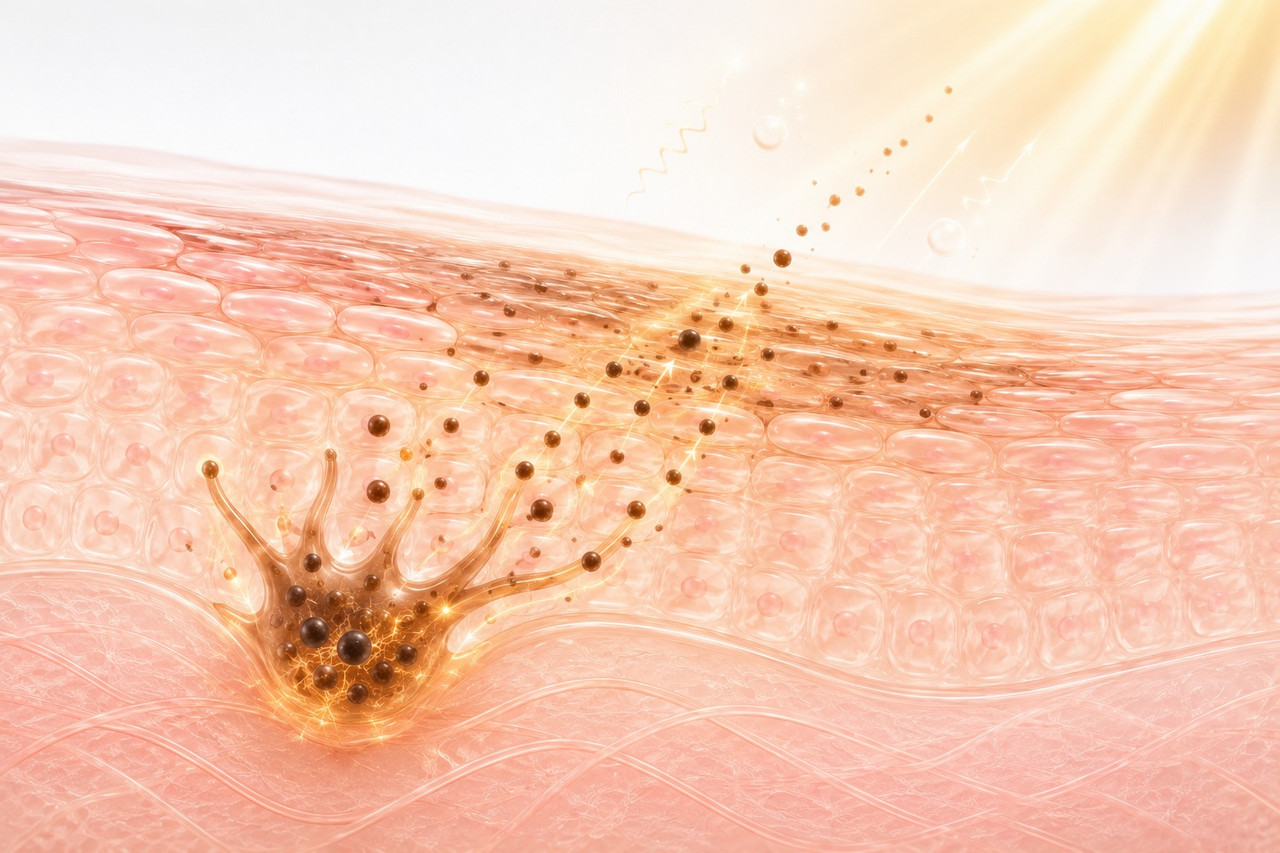
Inside the skin are specialised cells called melanocytes.
Think of them as tiny pigment factories responsible for producing melanin—the natural pigment that gives our skin, hair, and eyes their colour.
Most of the time, these factories work quietly in the background. But when the skin is repeatedly exposed to triggers such as:
·UV radiation
·Skin inflammation
·Repeated friction
the melanocytes receive a signal to increase pigment production. Over time, this excess pigment can become concentrated in certain areas, making the skin appear darker, duller, or uneven.
The switch behind melanin production
One enzyme controls the entire process
At the centre of the pigment-production pathway is an enzyme called tyrosinase.
Tyrosinase acts like the main switch inside the pigment factory. Once activated, it begins converting an amino acid called tyrosine through several stages:
Tyrosine → DOPA → Dopaquinone → Melanin
The newly produced melanin is then packaged and transferred towards the upper layers of the skin.
When this process happens repeatedly or unevenly, certain areas gradually become more pigmented than the surrounding skin.
Why it matters for this product
Dark spots are not only a surface-level concern
Many brightening routines focus only on removing visible pigment from the surface.
But pigmentation begins much deeper.
UV exposure can activate tyrosinase before any visible darkening appears. Inflammation and friction can continue sending pigment-producing signals, while free radicals place additional stress on skin cells.
This is why a more complete approach should not focus on only one stage of the process.
It should help support the skin through:
·Daily protection
·Pigment regulation
·Antioxidant defence
·Skin renewal
A four-part approach
Supporting the skin at every stage of the pigmentation pathway
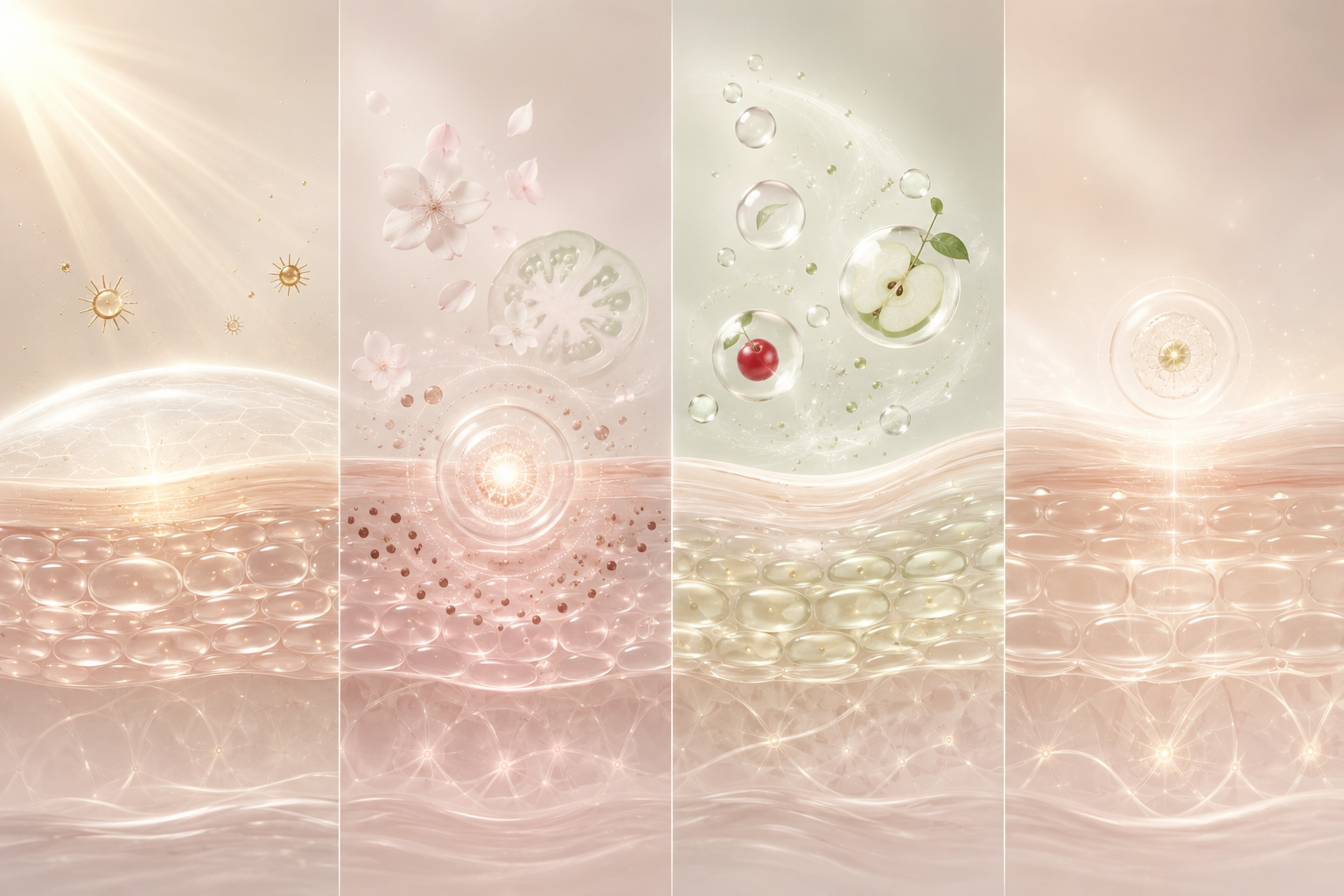
·01 — Strengthen daily UV defence
UV radiation is one of the most direct triggers of tyrosinase activity.
Daily sunscreen remains the first and most important layer of protection. The formula also includes Nutroxsun®, which is designed to provide additional inside-out support against UV-related oxidative stress.
This does not replace topical sunscreen. Instead, it complements a consistent external sun-protection routine.
·02 — Support balanced melanin production
Because tyrosinase plays a central role in producing melanin, supporting healthy tyrosinase regulation is an important part of maintaining a more even-looking complexion.
The formula combines Tomesoral™ white tomato extract with cherry blossom extract, ingredients selected to support the skin’s pigment-regulation pathway and reduce the appearance of accumulated dullness over time.
·03 — Defend against oxidative stress
UV radiation, pollution, and daily environmental exposure can generate free radicals.
When oxidative stress builds up, the skin may appear duller while also becoming more vulnerable to visible signs of premature ageing.
Cranberry and green apple powder provide plant-based antioxidant compounds that help support the skin’s natural defence system against daily oxidative stress.
·04 — Support skin renewal
Managing pigmentation is not only about preventing more melanin from being produced.
Skin that has experienced long-term UV and environmental stress also needs support during its natural renewal process.
PhytoCellTec™ Md Nu, derived from apple cell culture technology, is included to support the skin’s renewal environment and help maintain a smoother, healthier-looking complexion.
The pigmentation pathway at a glance
Four stages behind visible dark spots
·Trigger
UV radiation, inflammation or friction stimulates the skin.
·Activation
Tyrosinase—the pigment-production switch—becomes more active.
·Production
Tyrosine is gradually converted into melanin.
·Visible result
Pigment accumulates and moves towards the skin‘s surface, contributing to dark spots, dullness and uneven tone.
The takeaway
Brighter-looking skin begins with understanding the process
Dark spots and dullness are not created in a single day.
They develop gradually through repeated sun exposure, oxidative stress, inflammation, friction, and the continued activation of the skin’s pigment-production pathway.
That is why a complete daily routine should work across more than one direction—protecting the skin from new triggers, supporting balanced pigment production, strengthening antioxidant defence, and maintaining healthy skin renewal.
Rather than targeting only the visible spot, this formula is designed to support the broader pathway behind how uneven tone develops.