UV Defence · Skin Ageing
Sun protection is not only about avoiding a tan
UV exposure does more than temporarily darken the skin. Over time, it can generate free radicals, weaken collagen and elastin, and accelerate the visible signs of photoaging.
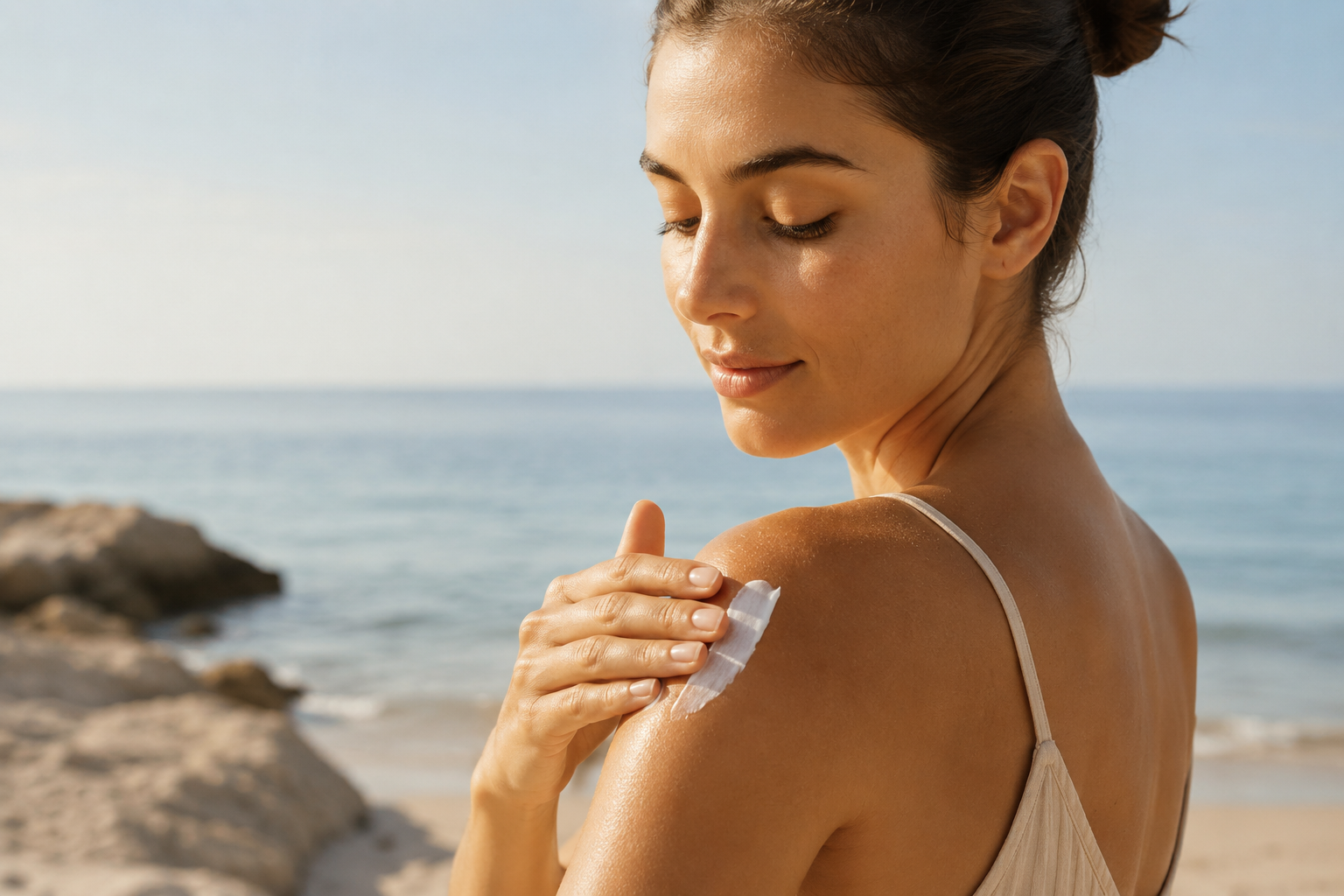
Most people become serious about sun protection because they do not want their skin to become darker.
But a tan is only one of the visible effects of UV exposure.
The deeper concern is photoaging—the gradual ageing of the skin caused by repeated exposure to ultraviolet radiation. Fine lines, loss of firmness, rough texture, reduced elasticity, and uneven tone may appear to be part of natural ageing, but cumulative UV damage can play a major role in how quickly these changes become visible.
What does UV exposure really do?
The damage continues long after the redness fades
UV radiation does not need to cause an obvious sunburn to affect the skin.
Everyday exposure can gradually weaken the skin’s structural support system. Even when the skin looks normal on the surface, oxidative stress may already be affecting the cells and proteins beneath it.
Some research estimates cited in the source material suggest that a significant proportion of visible skin ageing may be associated with cumulative photoaging rather than chronological ageing alone. This is why daily sun protection is not simply about preventing pigmentation—it is also an important part of maintaining the skin’s long-term structure and resilience.
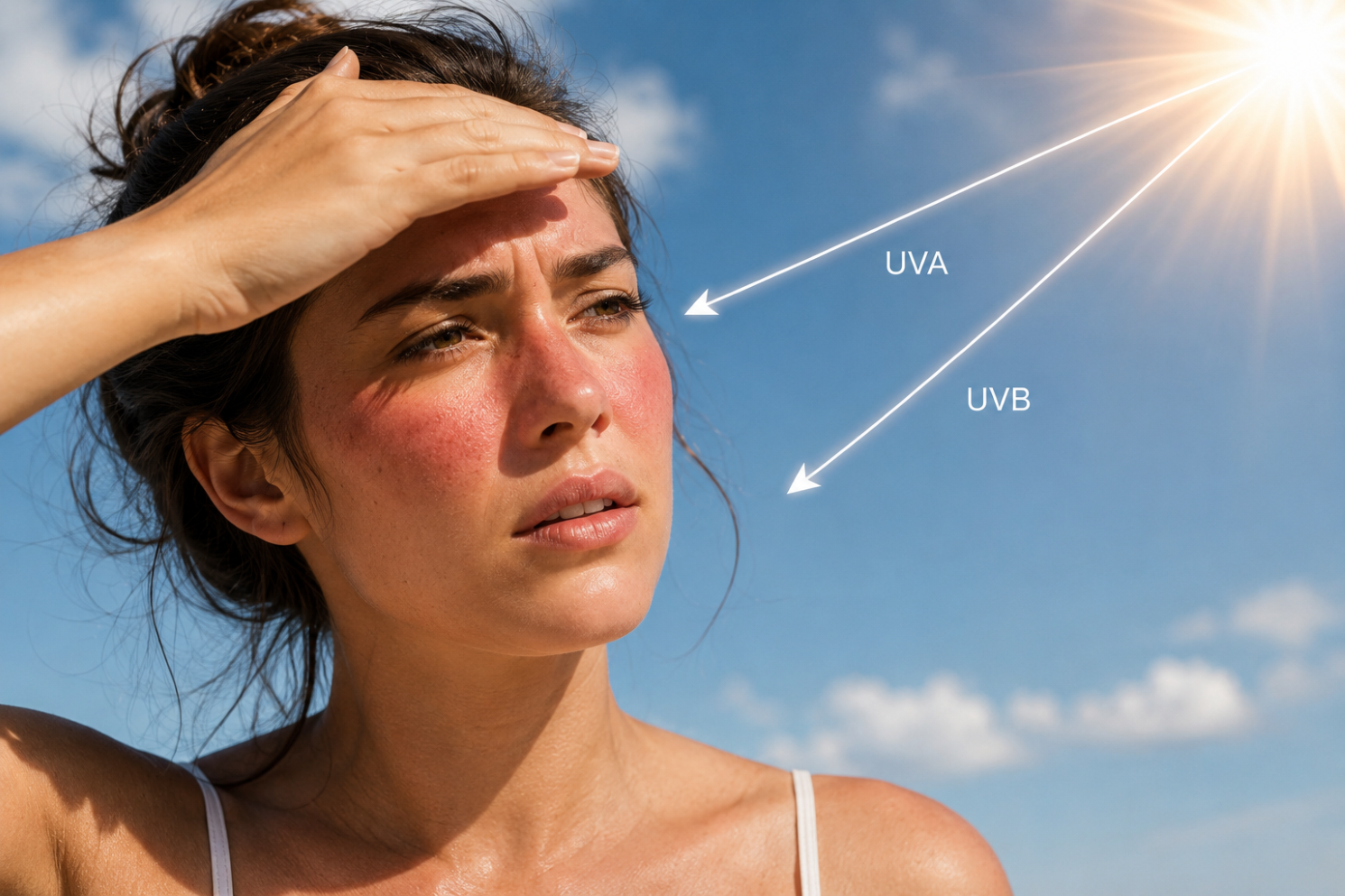
The invisible demolition crew inside the skin
Free radicals gradually weaken the skin’s support structure
When UV radiation reaches the skin, it can trigger the formation of unstable molecules known as free radicals.
Free radicals are chemically reactive because they are missing an electron. To stabilise themselves, they take electrons from nearby molecules.
That molecule then becomes unstable and may react with another molecule, creating a chain of oxidative damage.
Within the skin, two of the most important structures affected by this process are:
·Collagen
The supportive framework that helps the skin remain firm, smooth, and lifted.
·Elastin
The flexible fibres that allow the skin to stretch and return to its original shape.
As these structures become repeatedly damaged, the skin may gradually lose firmness and elasticity. Fine lines become more noticeable, texture appears rougher, and the skin may no longer feel as full or resilient as before.
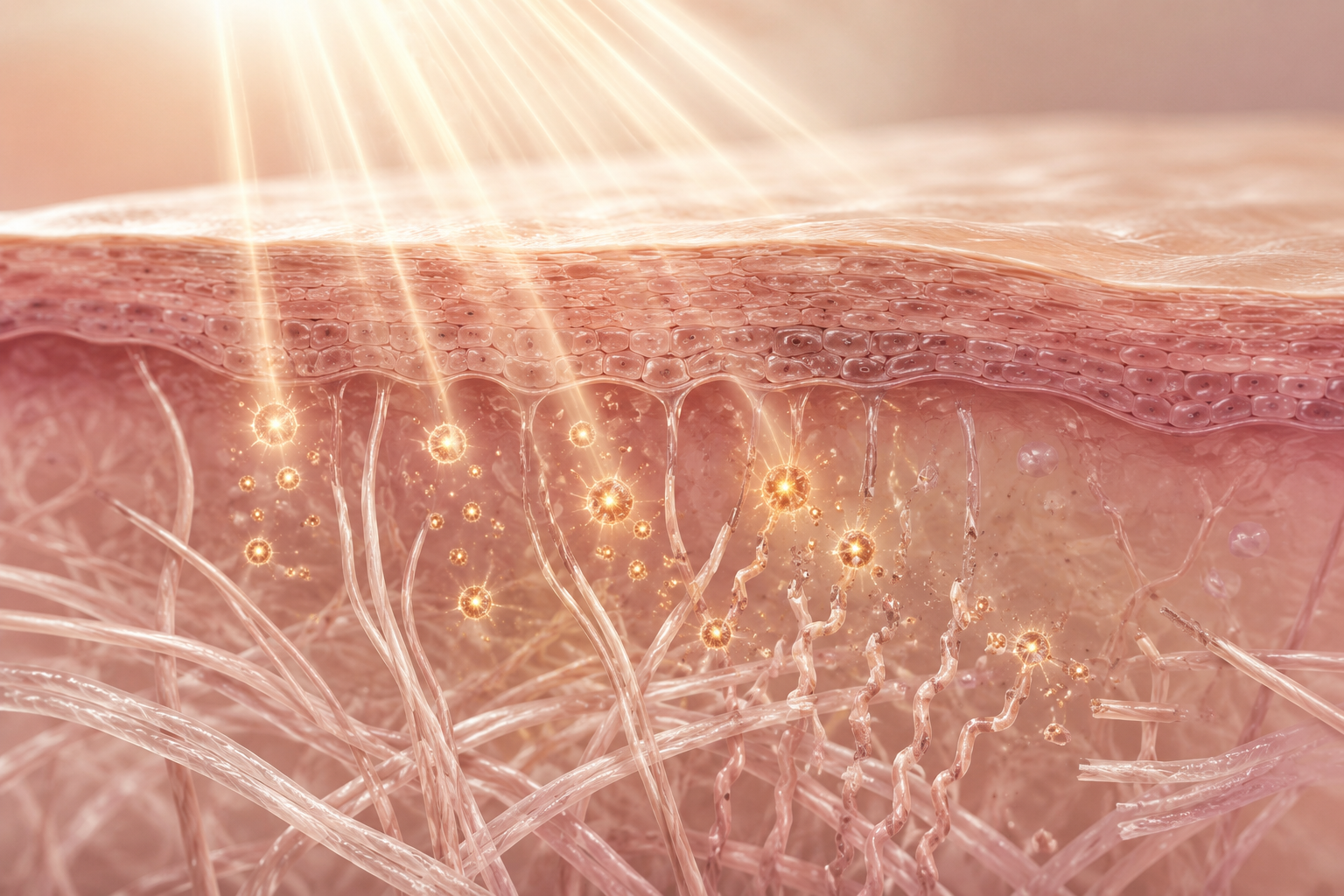
Why photoaging is easy to overlook
The damage is gradual, silent, and cumulative
One of the most difficult things about photoaging is that it does not always produce an immediate warning sign.
The skin may not feel painful. There may be no visible redness. Yet small amounts of oxidative damage can continue accumulating with repeated exposure.
By the time deeper wrinkles, sagging, roughness, or reduced elasticity become obvious, the underlying structural changes may have been developing for years.
By the time deeper wrinkles, sagging, roughness, or reduced elasticity become obvious, the underlying structural changes may have been developing for years.
Why it matters for this product
Topical sunscreen is essential, but no sunscreen provides complete isolation
Daily sunscreen remains the first and most important line of defence against UV exposure.
However, sunscreen does not create a perfect barrier. Application amount, missed areas, sweating, friction, and the need for reapplication can all affect how consistently the skin is protected.
A portion of environmental stress may still reach the skin and contribute to the generation of free radicals.
This is where internal antioxidant support becomes relevant.
The formula contains Nutroxsun®, a botanical combination derived from Mediterranean rosemary and grapefruit. It is included to support the skin’s antioxidant defence from within and complement the protection provided by a consistent topical sunscreen routine.
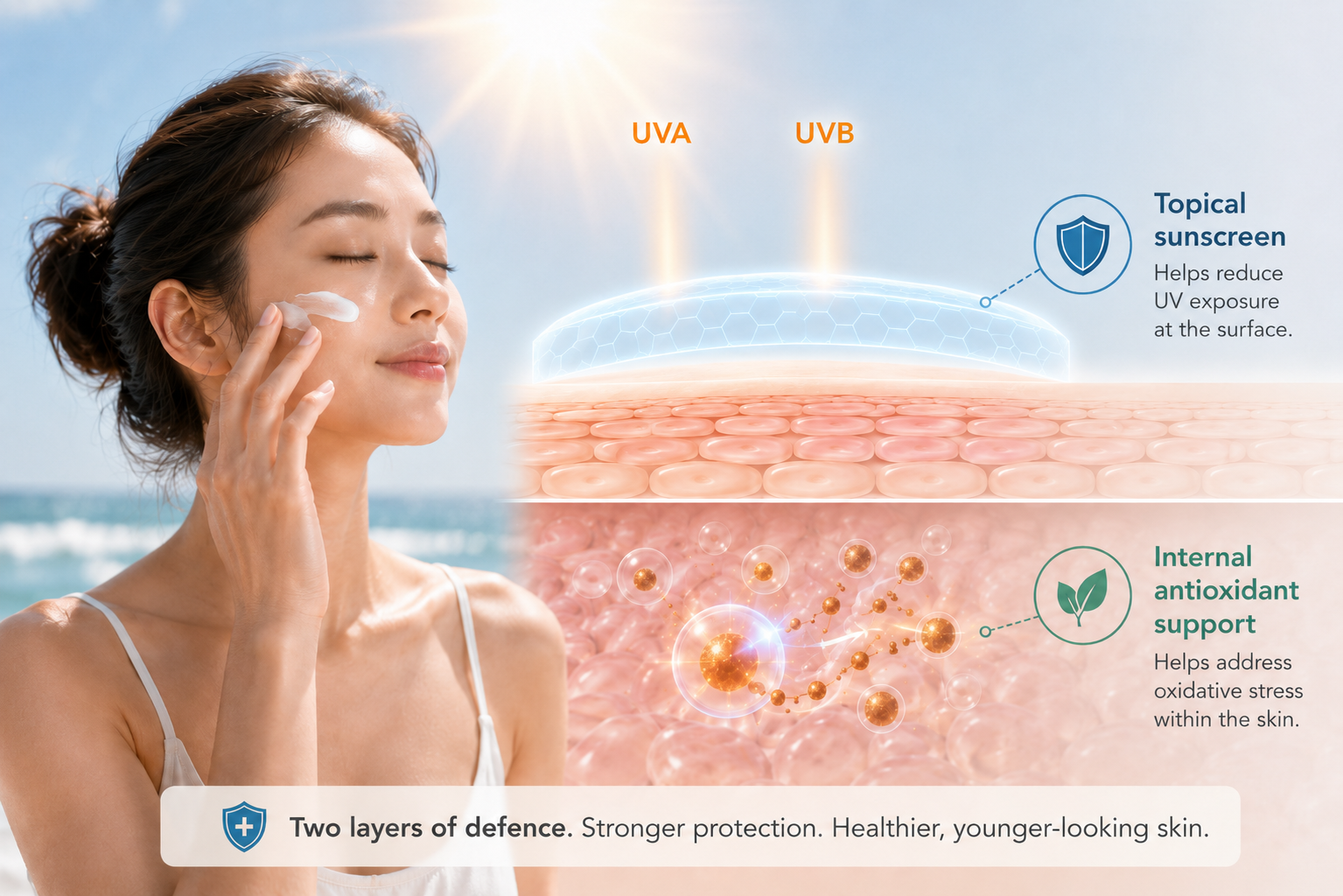
A two-layer defence strategy
Supporting the skin from the outside and within
·01 — External UV protection
Topical sunscreen helps reduce the amount of ultraviolet radiation reaching the skin.
It should remain the foundation of a daily sun-care routine and be applied in an adequate amount, especially before prolonged outdoor exposure.
·02 — Internal antioxidant support
Antioxidant compounds help neutralise free radicals before they can continue the chain reaction of oxidative damage.
Nutroxsun® is positioned as an additional layer of support, helping strengthen the skin’s internal antioxidant defence and complement the areas that topical protection may not fully address.
The defence pathway at a glance
Four stages behind UV-related skin ageing
·Exposure
UV radiation reaches the skin during everyday outdoor activity.
·Oxidative stress
UV exposure contributes to the formation of unstable free radicals.
·Structural damage
Free radicals gradually affect collagen, elastin, and surrounding skin cells.
·Visible photoaging
Over time, the skin may appear rougher, less firm, less elastic, and more uneven.
Conclusion
Sun protection is ultimately an anti-ageing habit
Preventing a tan may be the reason many people first start using sunscreen, but the greater long-term goal is protecting the skin’s structure.
UV-triggered free radicals can gradually contribute to collagen loss, reduced elasticity, rough texture, and premature visible ageing.
Topical sunscreen provides the first line of defence. Internal antioxidant support provides an additional layer by helping the skin manage oxidative stress from within.
When both approaches are used consistently, the skin receives more complete support against the cumulative effects of everyday UV exposure.